


Quick answer
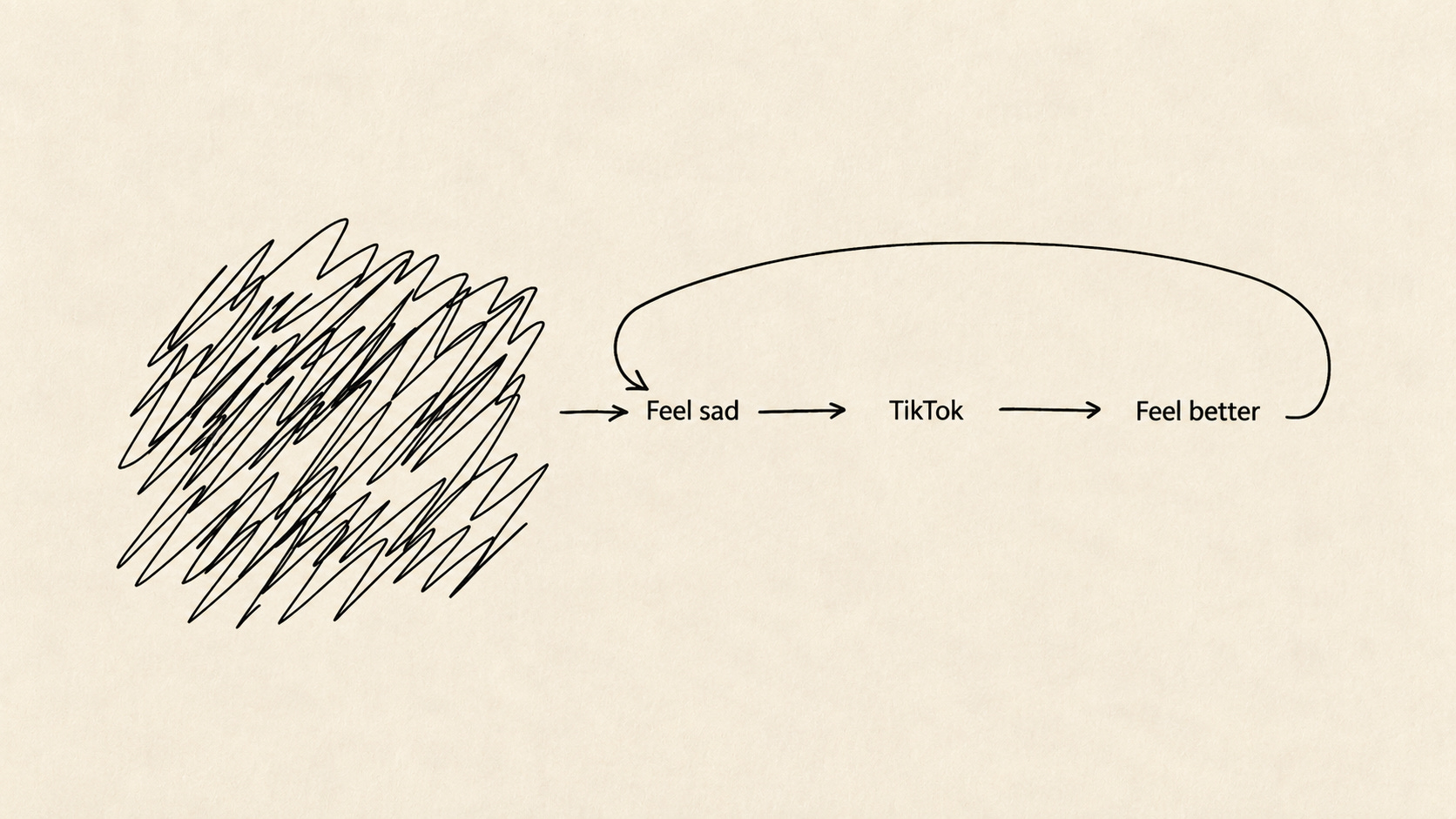
What is the hidden cost of doomscrolling? Doomscrolling can make you feel better in the moment, but if you keep distracting yourself from emotions that are signalling something is wrong, unresolved problems can quietly build up in the background. Over time, you may drift further away from your goals, values and even your sense of who you are. The hidden cost of doomscrolling can be losing yourself completely and never finding out what your life could have been if you had continued living in line with your values.
No AI was used to write this article.
I always thought that being stuck on a plane for a few hours is a perfect opportunity to immerse yourself in a book or podcast. No internet, no responsibilities and nowhere to be at the same time. Perhaps things have changed now that all the distracting apps started allowing people to pre-load a few hours’ worth of feed.
I was recently stuck on a 4-hour flight and I couldn’t help to notice the guy sat next to me. His body was bent in a neck-forward hunched position; his thumb was doing all the heavy lifting.
I overheard his conversation with friends:
· How was your flight mate?
· It was great, I doomscrolled the whole time
· Nice one! Me too!
Then with satisfaction they walked away.
I’m not here to judge. Yes, scrolling can be unhealthy but I don’t necessarily think it’s always that bad. If 4h of funny videos helps to kill the boredom, then fine, no problem. But it made me reflect on a wider pattern. I think that there are some hidden consequences of doomscrolling that are not always so easy to spot in the moment, and may show up much later.
What do I mean by doomscrolling?
Doomscrolling traditionally refers to watching or reading negative or depressing content, but people increasingly use the term more broadly. I’m using it here to describe compulsive or prolonged scrolling, even if the content is positive.
The doom has become more about the negative feelings associated with scrolling, including guilt over wasted time, existential dread, and a sense of loss of control.
The exact content we watch sometimes makes no difference to the wider pattern of why we scroll and what the consequences are.
Why scrolling works
We’ve all been in situations where we use our phones when feeling sad, bored, or depleted. I regularly hear my friends say things like “I was so tired, all I wanted to do was scroll on my phone”.
And... it works!
Low effort. High reward. Both are part of the equation. If more effort than thumb movement was needed, or there was no reward, we probably wouldn’t do it.
The typical pattern looks like this:
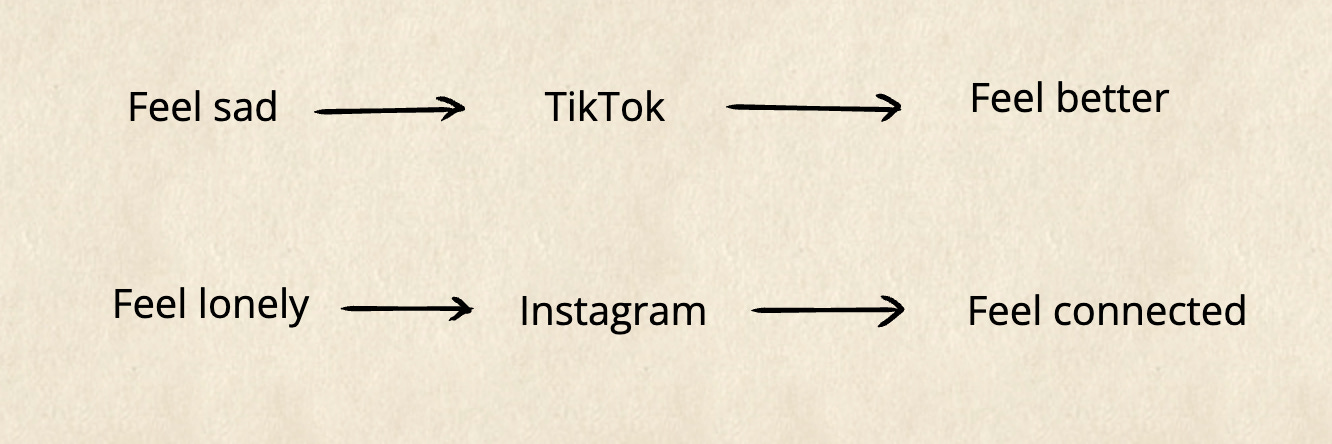
The idea is simple. You temporarily reduce the original negative feeling and replace it with a positive one. It doesn’t sound that bad right?
Restoring control
I think the above pattern is very common in everyday life. Our bodies communicate with us. Feelings and sensations can be signs that something isn’t how we want it to be, and we just do what’s necessary to restore control.
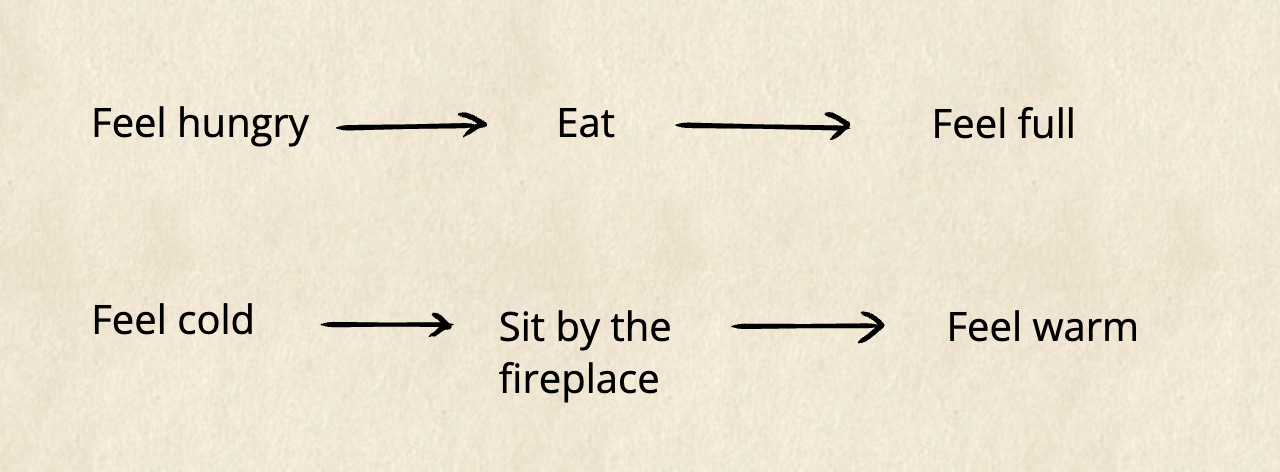
Not everything we do has an obvious long-term meaning. In fact, the majority of daily activities are short-term activities. You do them without much thought and just crack on with your day.
You think your short-term activity is better?
You may think that doomscrolling is not the best choice. That’s probably true. Using distraction to reduce unpleasant feelings is not ideal.
There are plenty of healthier options out there right?
Yes… but the thing is… “healthy” activities can follow the same pattern:
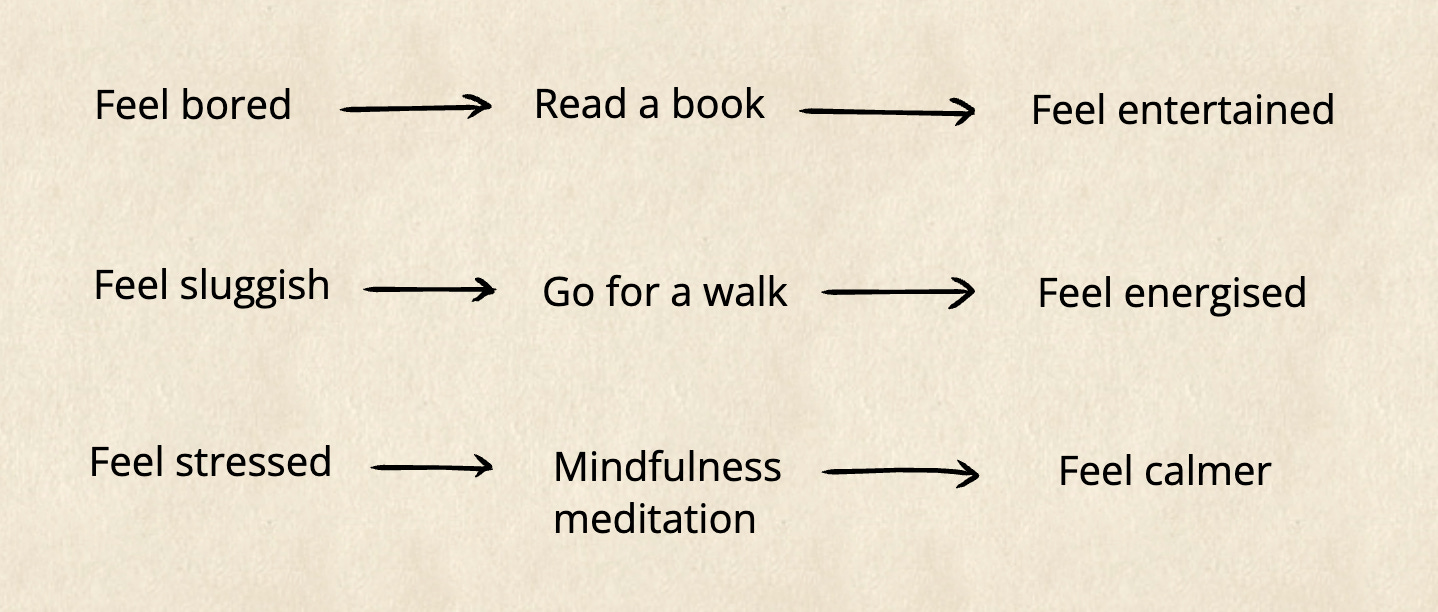
Is reading or going for a walk a healthier activity than doomscrolling?
Could mindfulness meditation be problematic?
It could be.
Perhaps because the principle is the same.
You feel bad and try to do “something” to feel less of that negative thing.
The hidden problem with doomscrolling
We all know phones are bad for us... fictional world, worsening social skills, shortening attention span, bla bla bla… Fine. But, something much bigger is hiding behind it! It’s hard to see at first because it may only show itself many years later.
Let’s expand on one of the examples.

Sadness is gone. Great!
But is the above sequence complete?
What happens before and after?

Take some time to analyse what the question marks may represent.
Resolving the wrong problem
TikTok helped. Sadness disappeared.
But was sadness a problem in itself?
Or were you feeling sad because you have another problem?
Emotions don’t usually appear randomly. There’s a system to it. They usually arise in connection to events, thoughts or goals:

Once we reveal the origin of sadness, we can see that suddenly the solution seems to be off track. Funny cat videos made no difference to the state of your bank account. In this case TikTok is a much healthier choice than compulsive shopping, but it still doesn’t solve the underlying problem.
Will sadness fully go away?
Unlikely.
Why not?
Because sadness and unmet life goals are best friends. Your bank balance is lower than what you’d prefer it to be. So you have an unmet goal. You need more money!
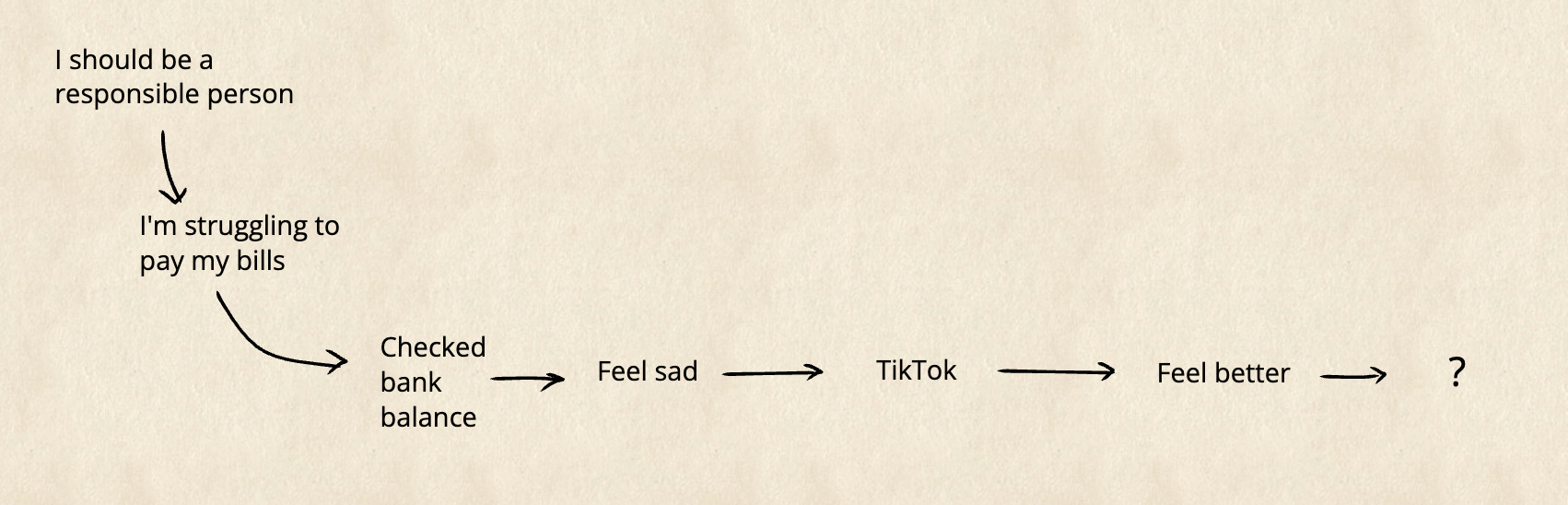
Being broke is very inconsistent with the image of the kind of person you aspire to be. But there’s more to it…
When one problem has many layers
Most situations are more complicated. If we add context, the graphs start showing a different picture, especially if we look at the problem in the context of personal goals and values.
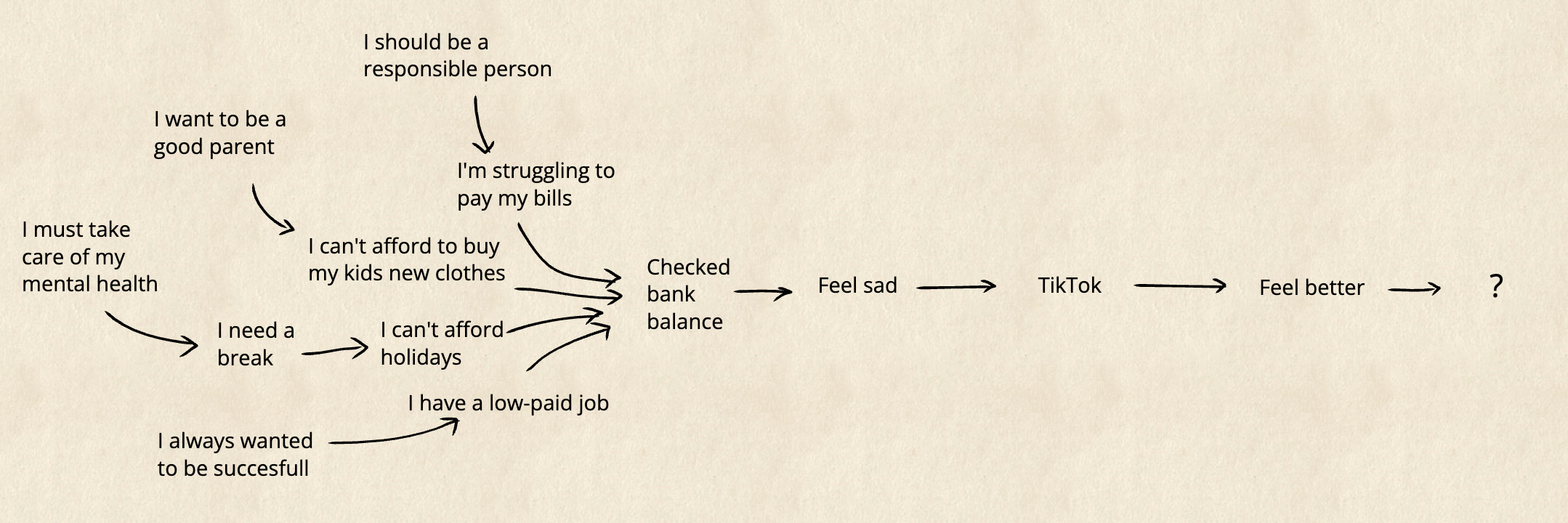
There are many solutions to financial problems. Scrolling is not one of them.
You may feel better that evening. But as weeks go by, things get worse. The discrepancy is still there, so sadness is likely to come back.
In theory, feeling sad about your bank account should prompt you to do something about it.
Why is your problem a problem?
The above graph quite clearly shows that one problem could have many underlying layers and sources. It touches on important values including how you want to see yourself, your vision of success, and what kind of parent you want to be. It makes sense why your problems are being flagged.
As problems are starting to pile up, wasted time also feels more conflicting because the weight of all this important stuff increases.
Of course, one unresolved problem, can create many other problems too. In the meantime, completely new problems can also appear.
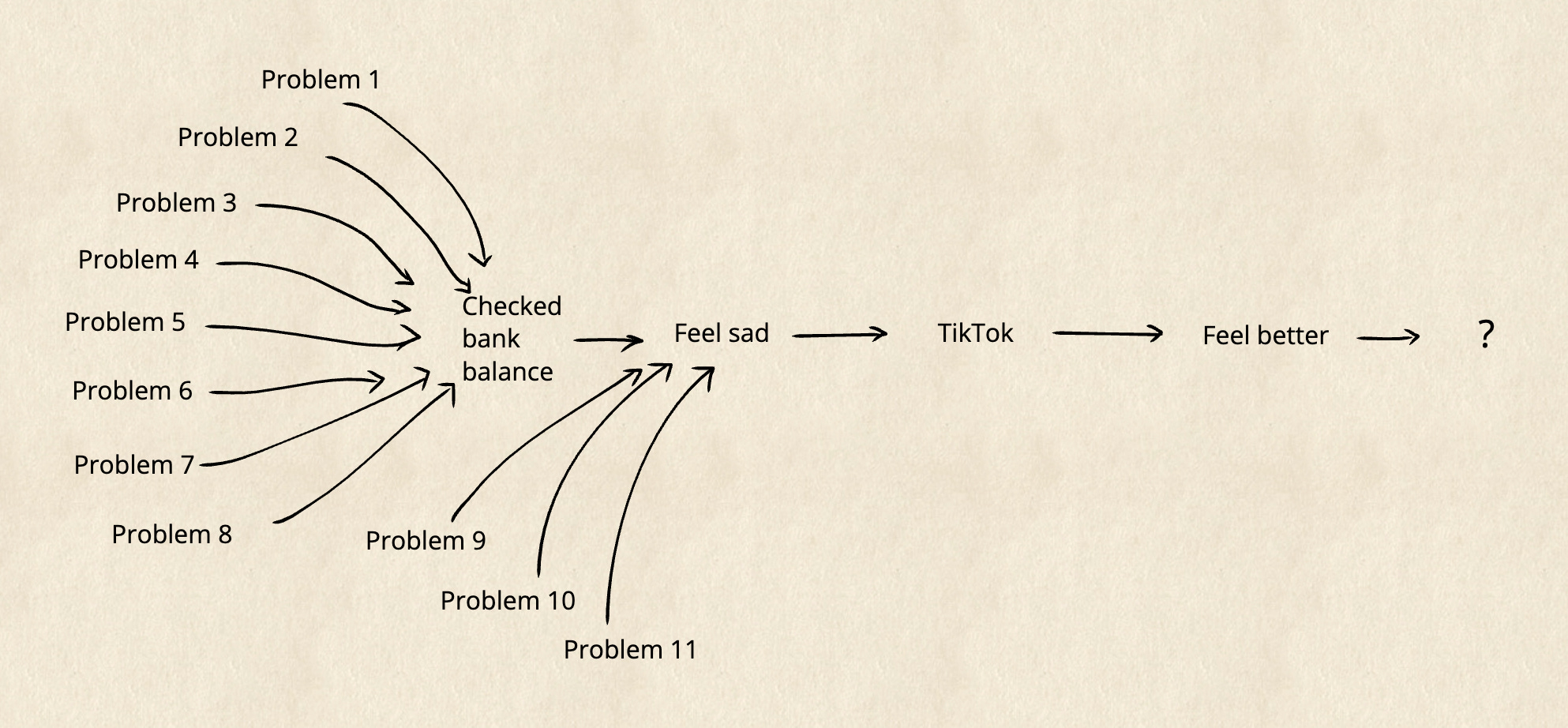
The more problems you have, the more intense your emotions.
The more intense your emotions, the more you’re craving that short-term relief. You get to the point you don’t even want to look at the mess. You start ignoring it as if it didn’t exist.
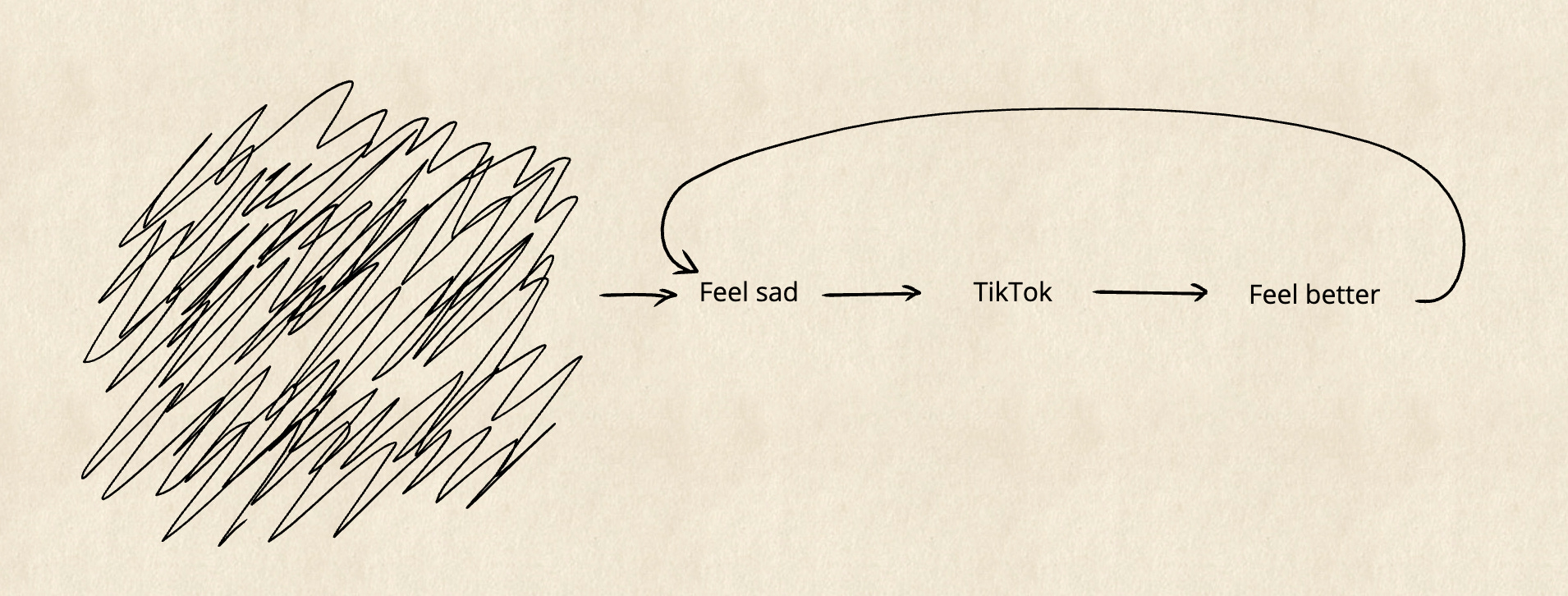
The hidden mess
I think the hidden problem behind doomscrolling is the mess we can’t or don’t want to see.
Things start getting heavy. We’re too scared, busy, overwhelmed, or unmotivated to even allow it to enter our awareness. There’s never a good day to do something about it.
So the mess gets bigger.
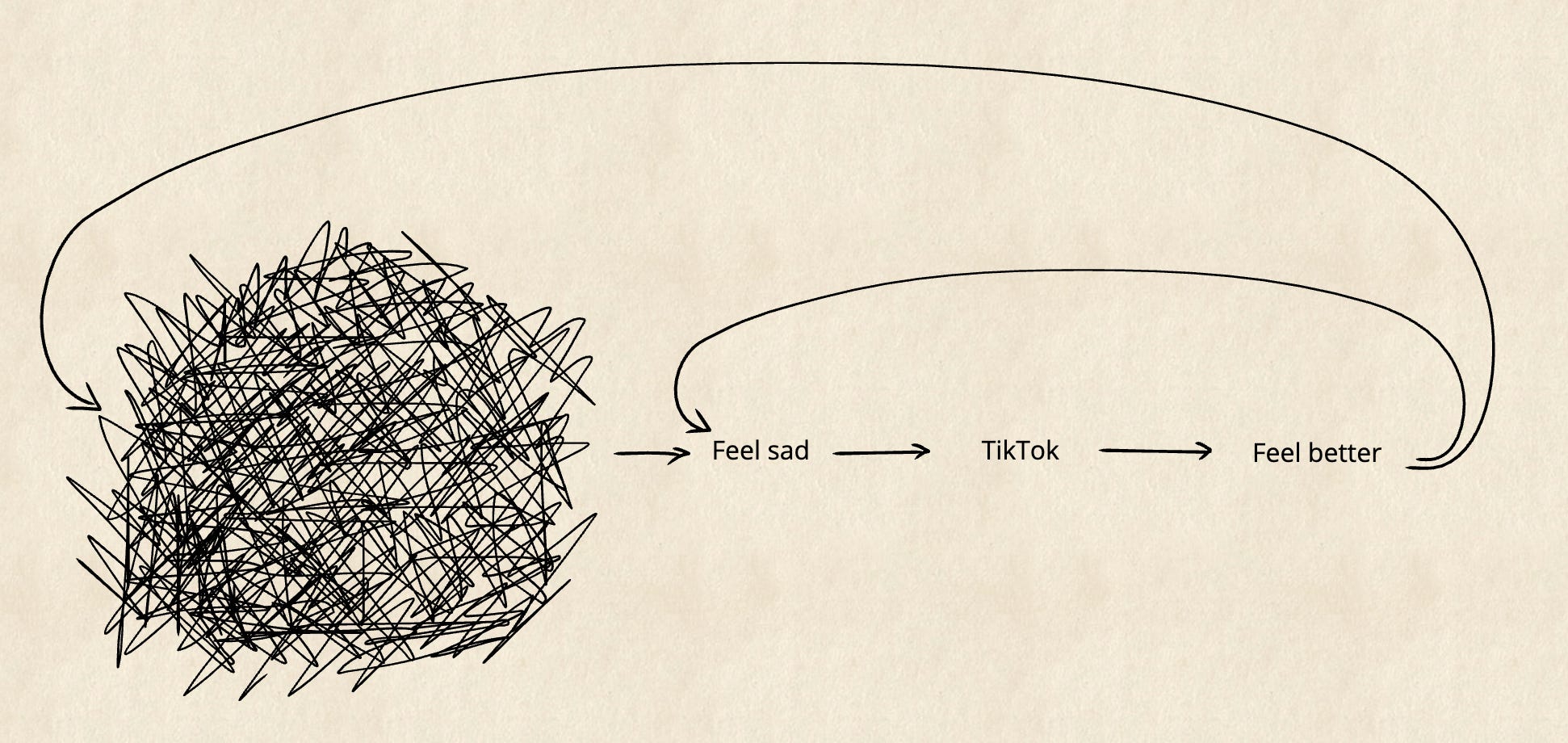
At this point you’re not just upset. You’re stuck in internal conflict. Your self-image, identity and life goals are all involved, and your body is shouting at you. If you’ve been stuck for a while, you may struggle to capture what exactly you’re sad about. Too much stuff has accumulated leading to chronic internal conflict.
Ultimately, you end up spending months, years, or even lifetime, living a life against your goals and values.
You lose yourself.
This is sometimes temporary and reversible. At other times, some missed opportunities, regrets, and life choices may lead to further internal battles.
Sometimes the only option left is to grieve for what your life could have been.
What to do?
I don’t like telling people what to do. The simplest solution often is to face your problem, but this sounds too simplistic and can mean different things for different people in different circumstances.
In the case of the above financial problems, you may need to start asking yourself some questions.
Why is my bank balance so low?
Do I need a better job?
Do I need to spend less?
Do I need a higher qualification?
Do I need to speak to my manager?
I also think asking yourself questions about those higher-level values and goals is even more important.
What kind of person do I want to be?
What are my values?
What kind of parent do I want to be?
Suddenly the image changes. Instead of doomscrolling, you spend more time reflecting on your situation and your values. As you gradually work through your problems, the mess gets smaller.
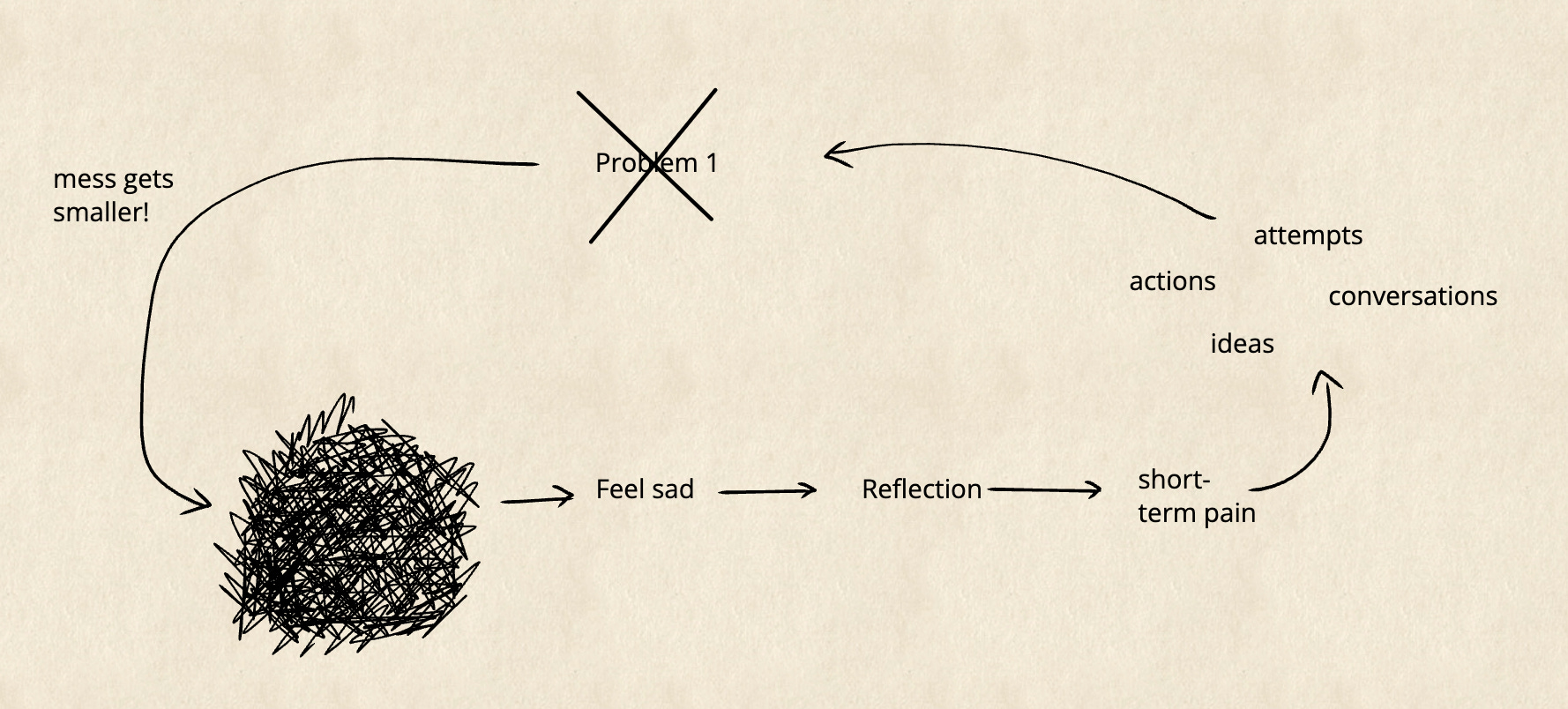
Look slightly wider
As you can see from the above example, there can be a lot happening in the background when we feel sad. Doomscrolling doesn’t necessarily touch any of it.
Your emotions can tell you something useful. Unless you tell them to shut up, then they can't.
Doomscrolling is just one option available to you.
Sometimes you simply need a distraction and that’s okay. If you enjoy distracting yourself, fine, no problem at all, as long as you are also doing something about all those important goals and values.
I think stimulating activities (like doomscrolling) can become more compelling when they’re repeatedly used to escape something negative. That can feed into a demoralising and self-spiralling internal conflict.
So if ever in doubt, try to shift your attention from what’s in front of you, and look slightly wider. Instead of shining a torch on one part of the room, put the lights on. What can you see?
Thank you for spending a few minutes here. :)
Sometimes a walk is enough to help you look a little wider. Here’s a photo I took recently at Goathland station.

Keep reading:


I didn’t know much about doomscrolling before reading this. I learned quite a bit from this one, Kuba. Great article!