


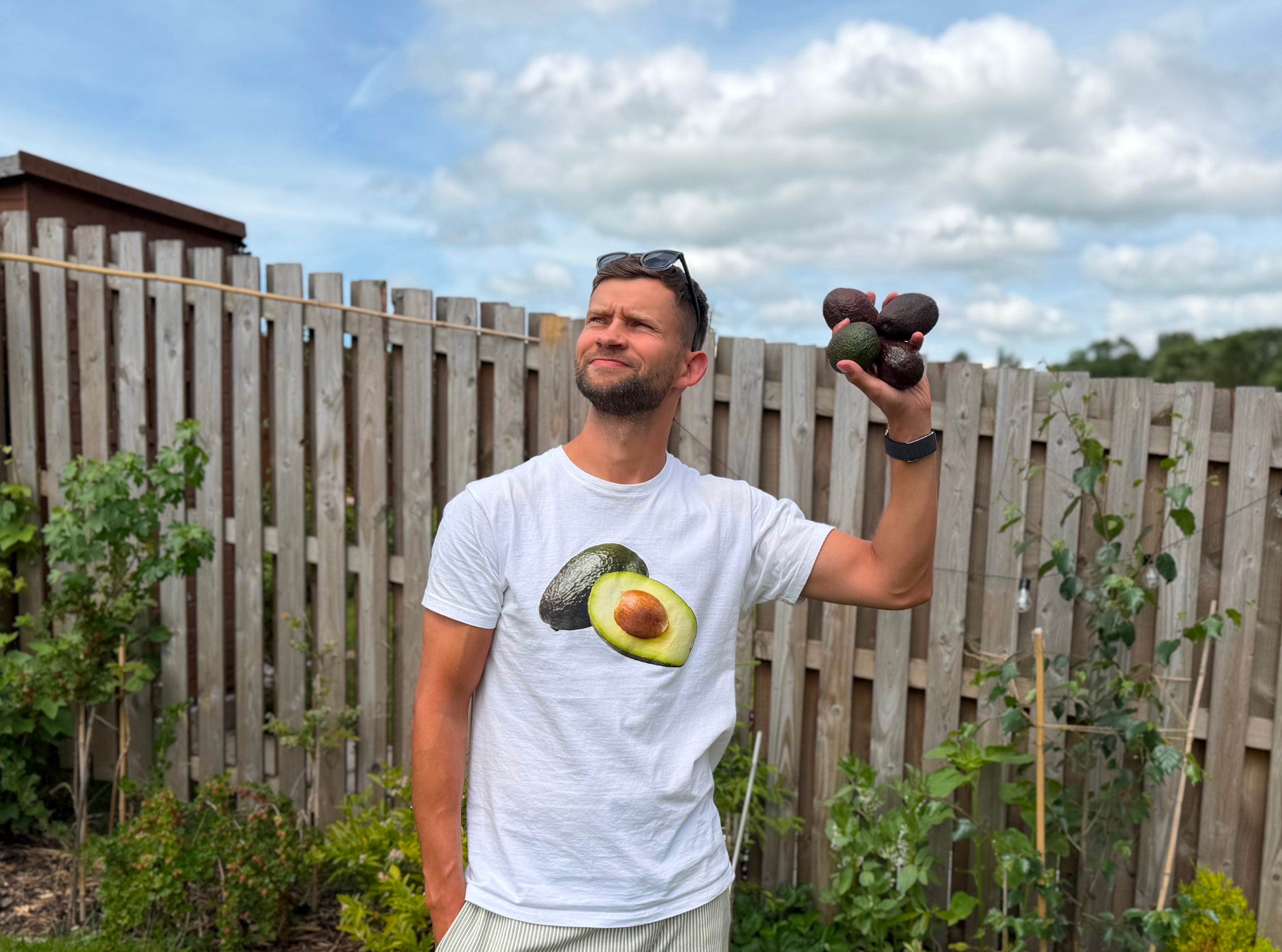
Smart summary: The chances that one day we find out avocados are unhealthy are small. But there are a few plausible ways in which the idea that they’re “healthy for everyone” could be challenged. This includes genetics, individual differences, the microbiome, what they replace in our diet, and many things about food and the human body that we don’t understand yet. I use avocados as an example to question how much uncertainty is still present when we label something as “healthy”.
Avocados have become a symbol of a healthy lifestyle. They feature on every possible “superfood” list and seem to have no obvious downsides.
They are good for your brain, heart and gut. They can improve your cholesterol and help you fix the broken lawnmower. Okay… there’s a high chance they can’t handle the last one.
It feels as if the world has reached its final conclusion.
Avocados are healthy.
Case closed.
When the world agrees on something, I become more suspicious. What if one day we find out this wasn’t true? Will people still love avocados in 2067?
Why question avocados?
I won’t bore you with the exact details of why avocados are healthy. We know they are. But I see a few plausible scenarios in which their reputation falls faster than a cancelled celebrity after an old tweet is dug up.
We’ve seen this happen with coconut oil, daily aspirin, antioxidant supplements, and even stretching.
From time to time, new research triggers a wave of content cancelling something previously considered healthy. Whenever this happens, my friend and I have a running joke that one day things will get so crazy that even avocados will be unhealthy.
Let’s immerse ourselves in this hypothetical scenario.
As much as it may feel like a negative or even pointless quest, I personally think it’s important. The learning from it potentially applies to any other healthy food choice or life advice. Being able to approach health claims with some distance and self-reflection may stop you from going too far with one idea or from going on an avocado-only diet.
To reassure you - avocados remain on my plate despite these reflections.
What are some plausible scenarios in which avocados get cancelled?
1. Individual differences
When I was a kid, I remember seeing a physiotherapist who was trying to correct my knees, hips and spine so that they were in the “correct” position. But did you know that modern physiotherapy has generally moved away from the idea that there is one healthy posture? Correcting it is no longer considered the answer.
In many other fields, though, science can be slow to adapt to the idea that each person is unique. Much research is based on group averages and happens in controlled settings. At the same time, it is well known, that each person’s biology is unique. No surprise, this often causes challenges within the context of protocol-driven healthcare.
Think about anecdotal evidence of centenarians still smoking daily into their 100s whilst non-smokers die of lung cancer aged 50. Different substances interact differently with different people, and we don’t fully know all the ins and outs of this.
It is highly likely that avocados are healthy and will remain healthy for most people. But what if there are some individual variations in how the body reacts to avocados that make them harmful for a small group of people?
For example, avocados are high in potassium, which is beneficial for most people. But high potassium intake can become a problem for those with impaired kidney function or those taking certain medicines that reduce potassium excretion.
Would you continue eating avocados every day if, hypothetically, there was a 1 in 20 chance they significantly increased your risk of heart disease?
(BTW, current evidence on cardiovascular risk actually points in the opposite direction, so don’t worry too much.)
2. Advanced understanding of the human body
I think the human body is extremely complicated, and we still don’t fully understand many things happening internally.
Perhaps the most obvious example is the occurrence of various side effects when taking medication. We get warned they may happen, but we don’t always know why. Some antidepressants can cause persistent sexual dysfunction, even after people stop taking them. Ibuprofen can cause swelling and wheezing in some people whilst reducing pain and inflammation in millions of others.
Science is doing much better at capturing the idea of homeostasis and the role of negative feedback loops. But I think these processes happen at so many levels and in so many places simultaneously that it’s impossible to capture them logically in a well-described system.
Perceptual Control Theory offers a way of thinking about it. But still… It sometimes feels as if the only option left is to trust our bodies to handle most challenges, because we can’t physically capture everything that is happening.
What if avocados increase or decrease the levels of certain hormones, substances or markers, causing unwanted adaptations that are harmful in the long term? Especially with regular or excessive consumption?
Perhaps it would be better to introduce more variety, rather than repeatedly relying on the same food and risking some unknown long-term adaptations.
One avocado per week is different from consuming 2-3 every day just because they’re healthy.
3. Unknown compound or molecule
In the same way that we can’t fully understand the human body, we also don’t know that much about different foods. We have a basic understanding of micronutrients and macronutrients. We know, for example, that something is high in protein or contains certain vitamins that can be good for us. But would it be useful to look beyond?
I find it interesting that we often assume something is healthy or unhealthy purely based on the rules created by limited human perception and research.
I think there’s a high chance there is more nuance, and each food contains various molecules and compounds we don’t yet know of. How does each one of them interact with the human body?
For example, avocados contain phytosterols, which can help reduce how much cholesterol we absorb. But in people with a rare genetic condition called sitosterolaemia, phytosterols can build up in the body and increase the risk of fatty deposits in the arteries.
What if one day we’re able to see more of what’s “inside” each food item?
Earlier I made the point that each human is unique. Perhaps each avocado’s internal “structure” is unique too? We don’t know whether the individual differences between avocados and between humans are worth paying attention to. Plus, growing practices, location, pollution, contamination and so on may also have an impact.
4. Bad replacement
Consuming avocados usually means they either replace another food or are eaten on top of the current diet. Both carry potential risks.
If you swap your morning doughnut for an avocado, the chances of a net positive are probably pretty high.
On the other hand, if you eat an avocado to replace the caloric equivalent of legumes or berries, you may miss out on some of the benefits those foods would have provided.
And finally, if you add avocados to a diet that already provides enough or too many calories, the fact that the fat is healthy doesn’t make those calories disappear. Some of that extra “energy” can be stored as body fat.
5. Microbiome
The growing research on the microbiome adds some complexity to many simple ideas.
For example, we often look at food as something that is digested to extract nutrients which in turn benefit our bodies. But the reality is that different gut microbes can turn components of the same food into different end products. These can then interact with our bodies in different ways.
These things are very unpredictable.
We all have trillions of microorganisms in our gut. Each person is carrying a unique microbiome. A study found substantial differences in people’s responses to identical meals, with the gut microbiome contributing to some of that variation.
Final words
I think it’s important to clarify that the aim of this article is not to make you paranoid about avocados. It’s the opposite. It’s to help you recognise that being obsessive about any food choice or health intervention can carry its own risks.
I think our attempts at being healthy can sometimes produce worse results than if we were to relax and let go of excessive rules or a forced healthy lifestyle.
I previously published an article suggesting that eating the same healthy breakfast can be beneficial in some contexts, so I am running the risk of contradicting myself. But what’s good in one context can be bad in another.
It’s good to aim for a healthy lifestyle, but finding a good balance and not putting all your eggs in one basket is perhaps more sustainable and less risky in most cases.
Thanks for stopping by :)
Please don’t give up on your avocados if you enjoy them.
Just remember they’re only food.
Keep reading:


